
Anxiety is a normal human response to stress, uncertainty, or situations that feel threatening. Feeling nervous before an important event, worrying about an upcoming responsibility, or experiencing temporary stress does not necessarily mean that you have an anxiety disorder.
However, when anxiety becomes frequent, overwhelming, or difficult to control, it can begin affecting sleep, concentration, relationships, work, studies, and everyday life.
The good news is that there are practical strategies that may help you calm anxiety, manage stress, and regain a sense of control. Simple techniques such as controlled breathing, physical activity, reducing caffeine, getting adequate sleep, and taking short breaks can be useful for everyday anxiety.
If anxiety is persistent or significantly affecting your life, professional support from a qualified mental health professional may also be beneficial.
What Is Anxiety?
Anxiety is the body's natural response to perceived stress or danger. It can activate the body's "fight-or-flight" response, causing physical and emotional symptoms.
Common symptoms of anxiety include:
- Excessive worrying
- Restlessness
- Feeling tense or on edge
- Rapid heartbeat
- Sweating
- Trembling
- Difficulty concentrating
- Trouble sleeping
- Shortness of breath
- Stomach discomfort
- Irritability
Occasional anxiety is common. However, persistent or severe symptoms may require professional assessment.
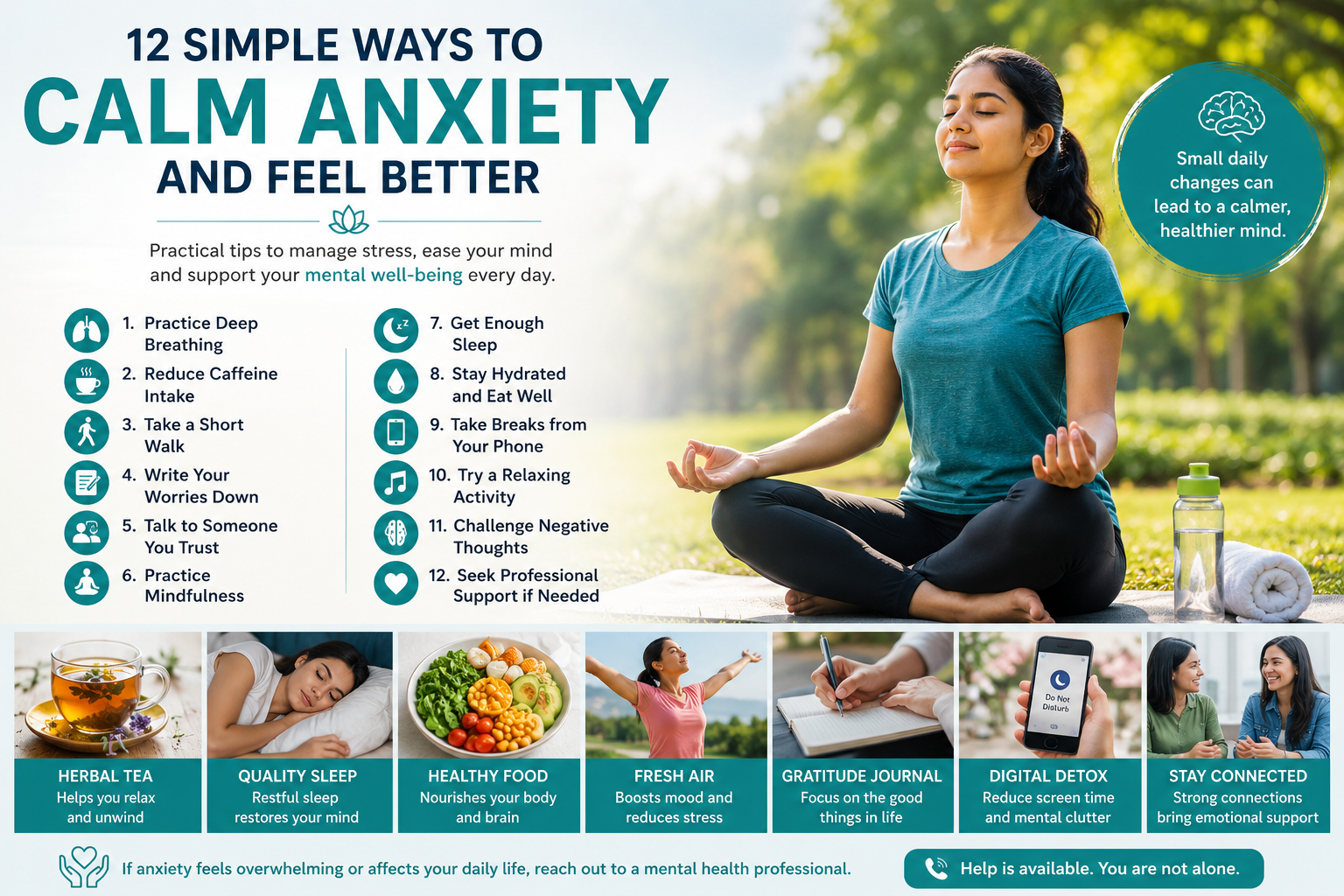
12 Ways to Calm Anxiety
1. Practice Slow, Controlled Breathing
When you feel anxious, your breathing may become faster or shallower. Deliberately slowing your breathing can help you focus your attention and may reduce the physical sensations associated with stress.
Try this simple technique:
- Sit comfortably.
- Relax your shoulders.
- Breathe in slowly through your nose.
- Breathe out gently and slowly.
- Repeat for several cycles.
Don't force yourself to take unusually deep breaths. The goal is comfortable, controlled breathing.
2. Reduce Caffeine
Caffeine can increase alertness, and some people find that high caffeine intake makes feelings such as nervousness, restlessness, or a racing heartbeat more noticeable.
If you frequently experience anxiety, consider reducing:
- Coffee
- Energy drinks
- Strong tea
- Caffeinated soft drinks
- Other high-caffeine products
Try reducing caffeine gradually if you consume it regularly, as sudden withdrawal can cause headaches and other symptoms.
3. Take a Short Walk
Physical activity can be a useful way to manage stress and support mental well-being.
When you feel overwhelmed, step away from the situation if possible and take a short walk.
You don't necessarily need an intense workout. Even gentle activities such as:
- Walking
- Stretching
- Cycling
- Yoga
- Light exercise
can become part of a healthy anxiety-management routine.
4. Write Down What Is Worrying You
Anxiety often involves repetitive thoughts that keep going around in your mind.
Writing down your worries can help organize your thoughts.
Try separating them into two categories:
Things I can control:
Actions I can take today.
Things I cannot control:
Things I may need to accept or stop repeatedly worrying about.
This simple exercise can make an overwhelming situation feel more manageable.
5. Talk to Someone You Trust
You don't have to handle every difficult emotion alone.
Talking with a trusted friend, family member, partner, teacher, colleague, or healthcare professional can provide emotional support and another perspective.
You don't always need someone to solve the problem. Sometimes simply being heard can help.
6. Practice Mindfulness
Mindfulness involves paying attention to the present moment rather than becoming completely absorbed in worries about the past or future.
A simple mindfulness exercise is the 5-4-3-2-1 technique:
- Notice 5 things you can see.
- Notice 4 things you can touch.
- Notice 3 things you can hear.
- Notice 2 things you can smell.
- Notice 1 thing you can taste.
This can help redirect attention toward your immediate surroundings.
7. Get Enough Sleep
Poor sleep and anxiety can influence each other. Worry may make it difficult to sleep, while insufficient sleep can make emotional regulation more difficult the following day.
Build a consistent bedtime routine by:
- Going to bed around the same time each night.
- Limiting stimulating activities before bedtime.
- Keeping your bedroom comfortable and quiet.
- Avoiding excessive caffeine late in the day.
- Giving yourself enough time to sleep.
If persistent anxiety is regularly preventing you from sleeping, consider discussing it with a healthcare professional.
8. Stay Hydrated and Eat Regularly
Skipping meals or becoming dehydrated can leave you feeling physically unwell, which may make anxiety symptoms feel more intense.
Aim for regular, balanced meals containing:
- Vegetables
- Fruits
- Whole grains
- Protein
- Healthy fats
Drink adequate water throughout the day according to your individual needs.
A healthy diet cannot cure an anxiety disorder, but good nutrition supports overall physical and mental well-being.
9. Take a Break From Your Phone
Constant notifications, social media, work messages, and exposure to stressful news can contribute to mental overload.
When you feel overwhelmed, consider taking a short digital break.
You could:
- Put your phone away for 20–30 minutes.
- Disable unnecessary notifications.
- Avoid checking social media immediately after waking up.
- Take a screen-free walk.
- Keep your phone away from your bed.
The goal isn't to eliminate technology but to create periods where your mind can rest.
10. Try a Relaxation Activity
Different relaxation techniques work for different people.
You could try:
- Meditation
- Gentle yoga
- Listening to calming music
- Reading
- Gardening
- Drawing
- Prayer or quiet reflection
- Spending time outdoors
Choose an activity that feels genuinely calming rather than treating relaxation as another task you have to complete.
11. Challenge Unhelpful Thoughts
Anxiety can sometimes make situations appear more dangerous or hopeless than they actually are.
When you notice an anxious thought, ask yourself:
"What evidence supports this thought?"
Then ask:
"Is there another possible explanation?"
For example, instead of thinking, "Something terrible will definitely happen," try considering, "I'm worried about this situation, but I don't know what will happen yet."
This does not mean ignoring genuine problems. It means examining anxious predictions more carefully.
12. Seek Professional Support When Anxiety Doesn't Go Away
Self-care strategies can be useful, but they are not a replacement for professional treatment when anxiety is persistent or severe.
Consider speaking with a mental health professional if anxiety:
- Happens frequently
- Interferes with work or studies
- Affects relationships
- Makes it difficult to sleep
- Causes frequent physical symptoms
- Leads you to avoid normal activities
- Feels difficult to control
A psychiatrist, psychologist, or other appropriately qualified mental health professional can assess your symptoms and recommend suitable treatment.
How to Calm Anxiety During a Sudden Episode
If you suddenly feel overwhelmed, try focusing on the present rather than solving every problem immediately.
You can:
Step 1: Sit somewhere safe and comfortable.
Step 2: Slow your breathing without forcing it.
Step 3: Relax your shoulders and unclench your jaw.
Step 4: Identify a few things you can see and hear around you.
Step 5: Remind yourself that intense anxiety can produce strong physical sensations.
Step 6: Contact someone you trust if you need support.
If symptoms are severe, unfamiliar, or suggest a medical emergency, seek urgent medical evaluation rather than assuming they are caused by anxiety.
What Can Make Anxiety Worse?
Certain habits may contribute to increased feelings of anxiety in some people.
These can include:
- Excessive caffeine
- Poor sleep
- Chronic stress
- Social isolation
- Excessive alcohol use
- Recreational drug use
- Constant exposure to stressful content
- Avoiding situations because of fear
- Irregular meals
- Lack of physical activity
Identifying your personal triggers can help you develop a more effective anxiety-management routine.
When Should You See a Doctor for Anxiety?
Anxiety deserves professional attention when it starts interfering with your quality of life.
Speak with a healthcare professional if you regularly experience excessive worry, panic-like symptoms, sleep problems, avoidance, or difficulty managing normal responsibilities.
You should seek urgent help if you feel that you may harm yourself, cannot keep yourself safe, or are experiencing a medical emergency.
Anxiety Treatment in Guwahati
People searching for anxiety treatment in Guwahati may benefit from speaking with a qualified mental health professional rather than trying to manage persistent symptoms alone.
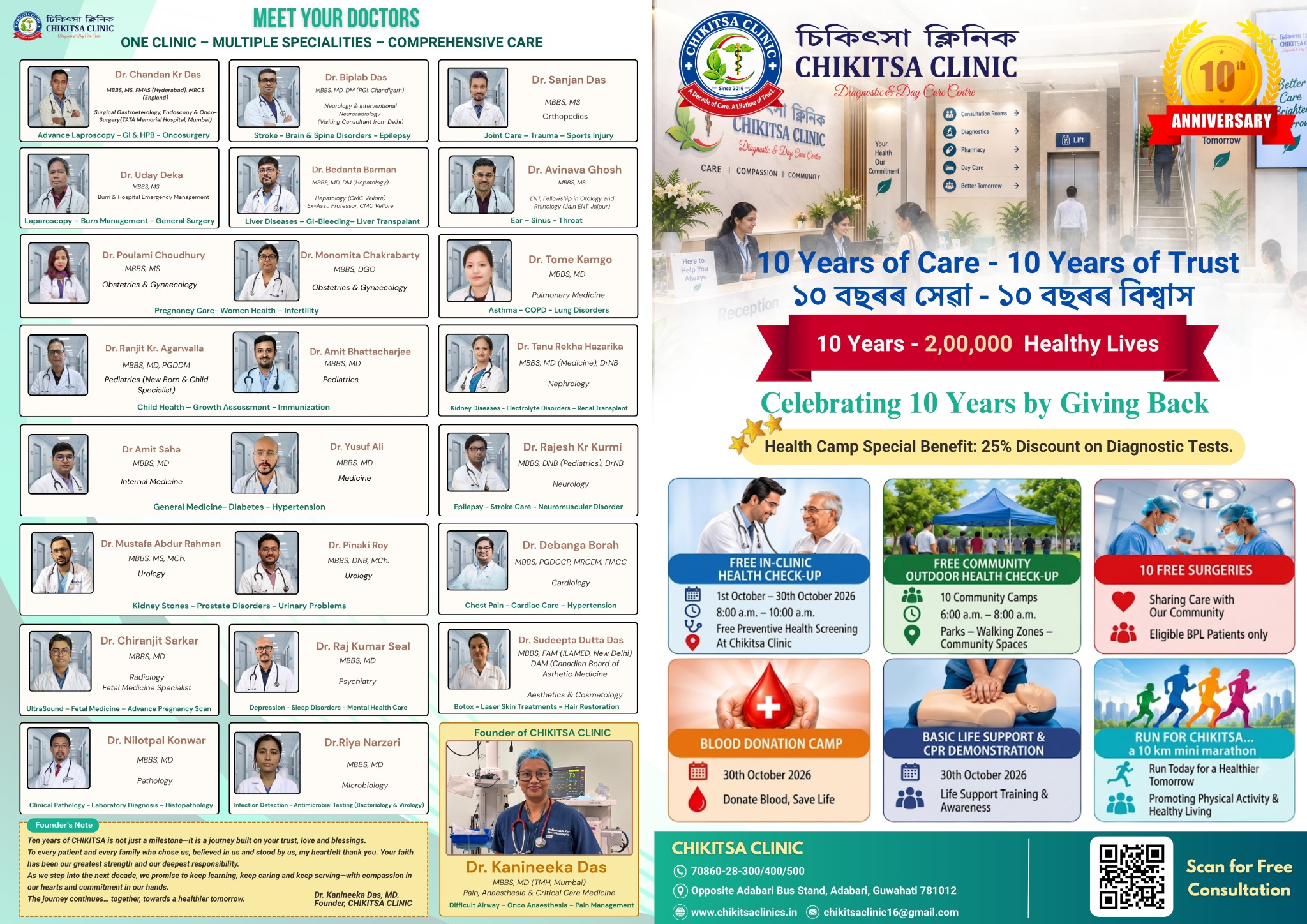
Chikitsa Clinic in Guwahati is a multidisciplinary day-care centre with specialty and super-specialty doctors. Its current website lists Psychiatry among its specialties and provides doctor appointment services.
The clinic is located opposite Adabari Bus Stand, Adabari, Guwahati, and offers a range of medical services within its multidisciplinary healthcare setting.
If anxiety is persistent, severe, or interfering with your everyday life, a professional assessment can help identify the underlying problem and determine an appropriate treatment approach.
Frequently Asked Questions About Anxiety
Q1. How can I calm anxiety quickly?
Answer: Try moving to a quiet place, slowing your breathing, relaxing your muscles, grounding yourself in your surroundings, and talking to someone you trust. If symptoms are severe or unusual, seek medical advice rather than assuming they are anxiety.
Q2. What is the best natural way to reduce anxiety?
Answer: There is no single natural remedy that works for everyone. Regular exercise, adequate sleep, mindfulness, balanced nutrition, reducing excessive caffeine, and maintaining social connections can support healthy stress management.
Q3. Does drinking water help with anxiety?
Answer: Staying adequately hydrated supports normal body function. Dehydration can make you feel physically unwell, which may make some symptoms feel worse, but drinking water is not a treatment for an anxiety disorder.
Q4. Can walking reduce anxiety?
Answer: Regular physical activity, including walking, can support mental well-being and may help reduce stress. Even a short walk can provide a useful break from a stressful environment.
Q5. Can caffeine increase anxiety?
Answer: Yes. Caffeine can cause increased alertness, restlessness, and a faster heartbeat, and some people find that high caffeine intake makes anxiety symptoms more noticeable.
Q6. Why does anxiety get worse at night?
Answer: At night there may be fewer distractions, allowing worries to become more noticeable. Stress, poor sleep habits, caffeine, and persistent worrying can also contribute to nighttime anxiety.
Q7. Should I see a psychiatrist for anxiety?
Answer: If anxiety is persistent, severe, difficult to control, or interfering with daily life, speaking with a qualified mental health professional is appropriate. A psychiatrist can assess symptoms and discuss suitable treatment options.
Q8. Can anxiety be treated?
Answer: Yes. Anxiety disorders are treatable. Depending on the type and severity of symptoms, treatment may include psychotherapy, lifestyle strategies, medication, or a combination of approaches under professional guidance.
Conclusion
Learning how to calm anxiety starts with understanding that occasional anxiety is a normal response to stress, while persistent or overwhelming anxiety may require professional support.
Simple strategies such as controlled breathing, walking, reducing excessive caffeine, getting adequate sleep, practicing mindfulness, taking breaks from screens, maintaining social connections, and challenging unhelpful thoughts can support everyday anxiety management.
However, self-care should not replace professional treatment when anxiety is persistent or significantly affecting your life. If you're experiencing frequent anxiety, panic symptoms, sleep difficulties, avoidance, or problems functioning at work or home, consider speaking with a qualified mental health professional.
For people looking for anxiety treatment in Guwahati, Chikitsa Clinic offers access to psychiatry within its multidisciplinary healthcare setting.